Monday, January 16, 2006

German media network trains Zamboanga
journalists on constructive conflict journalism
text HADER GLANG

“Safety of journalists and civilians, how to get the story, fair treatment from the national editors, language sensitivity, balance reporting, journalists are frontliners, setting aside the art of labeling, be culturally sensitive, generalizing Muslims as terrorists, and transparency.”

These were the words of local journalists who participated in the training on constructive conflict journalism when asked what special challenges for journalists reporting from the Autonomous Region in Muslim Mindanao.

The journalists said aside from trauma, they were also exposed to harassment, intimidation and coercion from the authority and rebels during coverage in conflict areas, “especially reporting corruption and crimes of officials…These are the major challenges that we have to deal with in ARMM.”

The journalists had gathered with selected students and educators in Zamboanga City and Bacolod City for a workshop on Peace and Conflict Journalism Training organized by the Peace and Conflict Journalism Network (PECOJON), Pax Christi Pilipinas, and the German government's International Weiterbildung und Entwicklung gGmbH (inWent).

German journalist and war photographer Antonia Koop lectured media practitioners in Zamboanga City and from Bacolod City on the guidelines for journalists covering the conflict -areas in the Philippines, particularly in Mindanao.

“A responsible conflict journalism needs deeper understanding of conflict,” Koop told the local journalists. “Only if we understand conflict, we are able to see solutions, to reflect about role and influence as journalists, and to come up with a better, fairer, more balanced, and more accurate rerporting.”

In conflict situations, Koop explained, resources are scarce, poor or no communication exists between the two parties and both parties have incorrect perceptions of each other, “there is lack of trust, unresolved grievances exist from the past and parties do not value the relationship between them and power in unevenly distributed.”

Koop encouraged journalists to be impartial, accurate, fair, objective and to stick with the media ethics in their coverage of conflict and should only use fair method to obtain news, photographs and documents.

The journalists were asked to work as groups during sessions at the workshop to define the conflict they are facing in Mindanao and to describe how violence is covered and presented by international media.

Topics covered by the training included the approaches to conflict, peace journalism versus war journalism, media escalation, the triangle of violence, invisible effects of violence, the media filter, the CNN-effect, the Feedbcak Loop, and many others which dealth with Israel-Palestine conflict and terrorism.

The training was funded by InWEnt, an organization for international human resources development, advanced training and dialogue. It was established through a merger of Carl Duisberg Gesellschaft e.V. and the German Foundation for International Development.

It was held at the Jardin de la ViƱa hotel last January 12-14, 2006. Another training will be held in other parts in Mindanao this year. (ZS)
Indigenous cultures in the southern Philippines
photos HADER GLANG


Yakan in Basilan


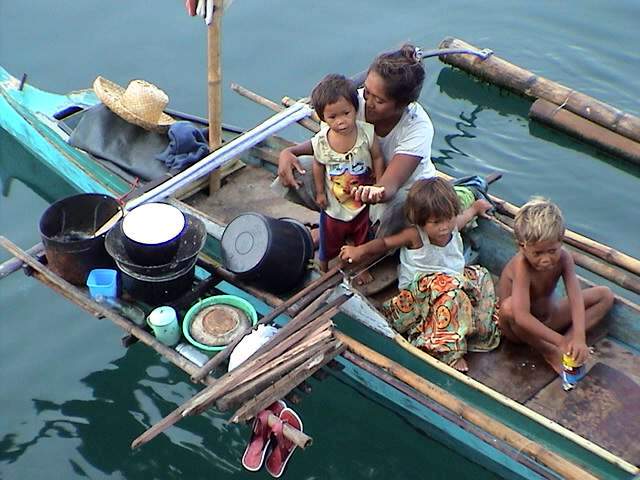
Badjao in Zamboanga


Badjao in Zamboanga


Moro swords


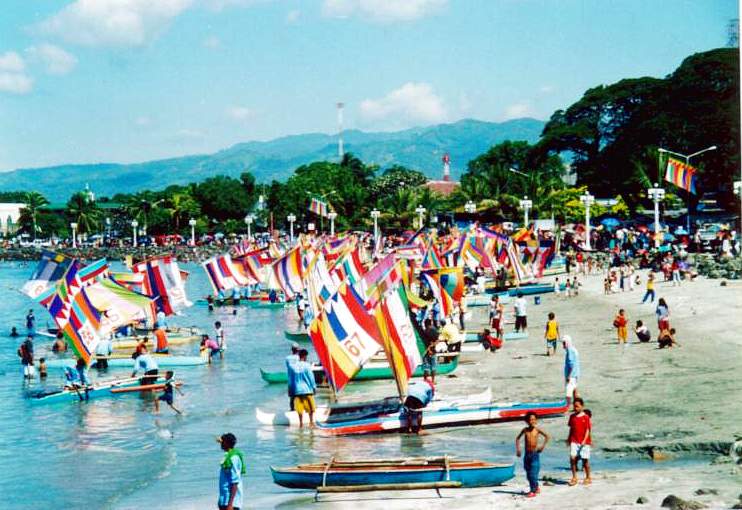
Vinta in Zamboanga


Yakan in Basilan


Tausug in Sulu


Badjao in Zamboanga


Badjao in Zamboanga


Tiruray in Maguindanao

BADJAO, the Sea Gypsies

The Badjao are popularly known as "Sea Gypsies" of the Sulu and Celebes Sea. The name "Badjao" is a Malay-Bornean word which connotes "man of the seas" or Orang-Laut in Bahasa Malayo. Their Sama and Tausug neighbors call them by pejorative names such as Samal Palau (outcast Samal). The badjao call themselves as Samal Laus (Sea Sama). Many badjaos live most of their lives in houseboats, which occasionally cluster in moorings near certain strands and beaches, so as to do business in nearby market places of the land-dwelling Sama and Tausug. In the markets they barter their sea products for such farm produce as fruits and cassava. On the shore they also fetch drinking water, gather firewood and gather materials needed in the construction and repair of their houseboats.

The Badjao or sea gypsies inhabit the shores and waters of Sulu archipelago. These groups of Badjaos may be classified according to lifestyle.The badjao inhabiting Siasi Island are semi-sedentary, building stilt-houses over the water and engaging in fishing. The group of the Sitangkai builds permanent homes on the shore while the group live in the houseboat called sakayan. The stilt-houses merely serve as a temporary refuge during the time that their boathouses undergo repairs. The other boats are called lipa, vinta, pelang and kumpit.

The Badjaos are found in many coastal settlements dotting the Sulu archipelago, particularly in Jolo, Tawi-Tawi and Sitangkai. Others are scattered in Davao, Surigao, Zamboanga, Basilan, Bohol, Cebu and Manila in search of livelihood. They are estimated to be 191,817 (OSCC,1987). Their physical features are distinctively attributable to their environment and their mode of life. They have sturdy built dark brown skin and bronze hair. Their manner of walking is affected to a large extent by their crouching on boat stern while sailing or fishing.

The Badjaos are oppressed tribe. They are referred to as palao or lumaan (God forsaken) by the Tausugs. Badjaos developed an inferiority attitude towards the Tausugs and the Samals who always look down on them. Originally, they used to live on the land but the constant pressure on their safety by the other Muslim tribes forced them to seek the sea. They eventually found that the sea afforded them greater avenues of escape in the event of attack.

The sea environment shaped Badjao attitude. They learned to exploit the sea to their fullest advantage. Their prowess is in fishing, raising seaweeds and oyster. Pearl gathering is another occupation, and products of the sea they gather to sell at market. (ZS)
A southern royal wedding
text HADER GLANG


The 28-year-old groom Muamar Salamaddin
Tulawie, and the 23-year-old bride Nurwiza
Indanan Sahidulla, in a modernized Tausug
wedding ensemble. The bride is wearing a
24 karat golden veil.


Apart from an opulent Christian heritage, the Philippines has an equally rich Muslim culture, perhaps no more pronounced than in the Tausog wedding.

In 1997, when Muamar salamaddin Tulawie, son of a war lord of Sulu province, married Nurwiza Indanan Sahidulla, daughter of an equally prominent family in the southern archipelago that is home to a quarter of a million Tausog, the engagement period and wedding ceremony lasted for days, ending with a lavish celebration higlighted by native music and dance, a feast and a parade.

Muamar is a son of former Jolo police chief Pershing Muhala Tulawie, whose father was the first governor of Sulu. Nurwiza is a daughter of former Tongkil town mayor Abdul Wahi Omar Sahidulla and Nur-ana Indanan Sahidulla, the incumbent vice governor of Sulu.

Prior to the “wedding of the year”, the Sahidulla family asked the Tulawie P500,000 for the dowry, P100,000 for the clothes of the bride and the groom, 15 sacks of rice, seven cows, seven big platters of traditional delicacies, dozens of cartons of cigarettes, and the services of professional Tausug Muslim singers and organists for the feast.

The Tulawie-Sahidulla union is a classic example of the Tausug pre-arranged marriage (pagpangasawa), the other types being marriage by abduction (pagsaggau), and elopement (pagdakup).

When the elder Tulawie decided to ask for the hand of Sahidulla’s daughter for his son, he and several kin brought with them fine gold worth P30,000 to signify Muamar’s honorable intentions for Nurwiza. Later, agreeing to the union, Nurwiza’s parents informed the village headman who relayed the joyful news to Muamar’s parents. The headman then presided over negotiations for the dowry or ungsud, which literally means “that which is given in payment” and included money, clothes and jewelry.

On the eve of the affair and in accordance with Islamic tradition, Muamar and his trusted men delivered the entire bride wealth. This was done to the beat of native percussion instruments such as gongs, “kulintang” and “gabbang”. Everyone in the village, young and old alike, was invited.

Preparations for the marriage began very early the next morning in both houses. Kinsmen, friends, and guests of the couple gathered to slaughter the cows and roast or cook them. The menu also included beef black soup, curried chicken, rice, vegetables, fish, noodles, sweets, fruits, and coffee. The musicians performed as guests talked, ate, and laughed. Visitors included not only the immediate kinsmen and neighbors of the couple but also political and military allies.

In the afternoon, amid raucous yelling, the groom was carried on the shoulders of friends and relatives to the house of the bride, the guests following in a large procession. The marriage ceremony, consisting of prayers and rituals in both Arabic and Tausug, took place afterwards. Nurwiza was secluded while the ritual was conducted between Muamar Tulawie and Abdul Wahi Omar Sahidulla. Marriage, according to Islamic custom, is a sacred contract between the young man and the girl’s father.

Following the ceremony, Muamar was led to Nurwiza, whom he touched on the forehead to formally seal the marriage. In the ensuing festivities, husband and wife sat together stone-faced as dictated by tradition. The warm glow on the faces of their rejoicing family, relatives and friends however told the bigger story – one of a celebration of love, and life itself.

Among Tausugs, the bride wealth has several constituent parts, which are often negotiated separately, and have different meanings:

Dalahan pagapusan (valuables for the offspring). Money of animal intended for use of the couple, which must not be slaughtered at the marriage feast. It will not be returned on divorce if children have been born.

Dalaham hus a tawid (valuables dropped in the ocean). Valuables intended for the girl’s father.

Basingan. Intended as an explicit payment for the transference of kinship rights to the male side (usba) preferably an antique gold or silver coin.

Sukawin baytal-mal (payment to the treasury). A payment to the legal officials and religious leaders who sanction the marriage. In the past, a part was delivered to the Sultan.

Specific demands for particular members of the girl’s kindred. In richer and less traditional families, this may involve modern times such as guns, radios, vehicles, appliances, television, etc.

Musicians and entertainers for the wedding. Sometimes, specific performers are requested.

Cost of the wedding feast: rice, animals for slaughter, cigarettes, candy, traditional delicacies, etc.
Freelance scribe wins indigenous people's month photo contest

The winning piece.
Freelance journalist and news photographer Hader Glang won the grand prize in the regional level of the Indigenous People's Month 2005 photo competition/exhibit held at the Western Mindanao State University (WMSU) last October 15-17, 2005.
"I am very honored and surprised, and I'm totally shocked that I won," said Glang. "Thank you very much to the judges for recognizing my work."
The winning piece "Yakan," which depicted the authentic culture and practice of Yakan tribe in Basilan, earned the judges nod as the best photograph about indigenous people and their tradition.
It was a close-up shot of an old Yakan woman, who still weaving at 83, chewing betel in combination with kava (Piper Methysticum) leaf at a must-see Yakan weaving center in Barangay Upper Calarian.
Glang, who writes for Zamboanga Today, Manila Standard and stringer of NHK Japan Broadcasting Corporation, bested 27 other entries from artists, schools, organizations, agency and other groups in Region 9 and Autonomous Region in Muslim Mindanao (ARMM).
Project Coordinator John Magno said the winning piece became the entry to the major island interactive photo exhibits in Quezon City (Luzon), Roxas City, Capiz (Visayas), and Cagayan de Oro City (Mindanao) last Oct. 27.
Magno said the photo will also be included/featured in the travel magazine or book that will be produced by the National Commission for the Culture and the Arts (NCCA).
The photo contest with the theme "Katutubo: Noon at Ngayon" was a cooperative effort by the NCCA, Department of Education (DepEd), and the Department of Interior and Local Government (DILG), aimed at creating a deeper understanding and appreciation of the culture and traditions of the various traditional communities in the Philippines. (ZS)